



Why Stress Triggers Flare-Ups, and Why It’s the Hidden Root of Gut & Skin Issues
For years, skincare was treated as something that lived entirely on the surface.
A breakout? Use a cleanser.
Redness? Add a serum.
Inflammation? Switch moisturizers.
But research over the last decade has made one truth impossible to ignore:
Most skin problems don’t start on the skin, they start in the brain and gut.
Your skin is constantly responding to signals sent from your brain and digestive system. Stress, overwhelm, cortisol spikes, gut imbalance, and inflammation don't just affect mood or digestion. They directly shape how your skin behaves, repairs, and defends itself.
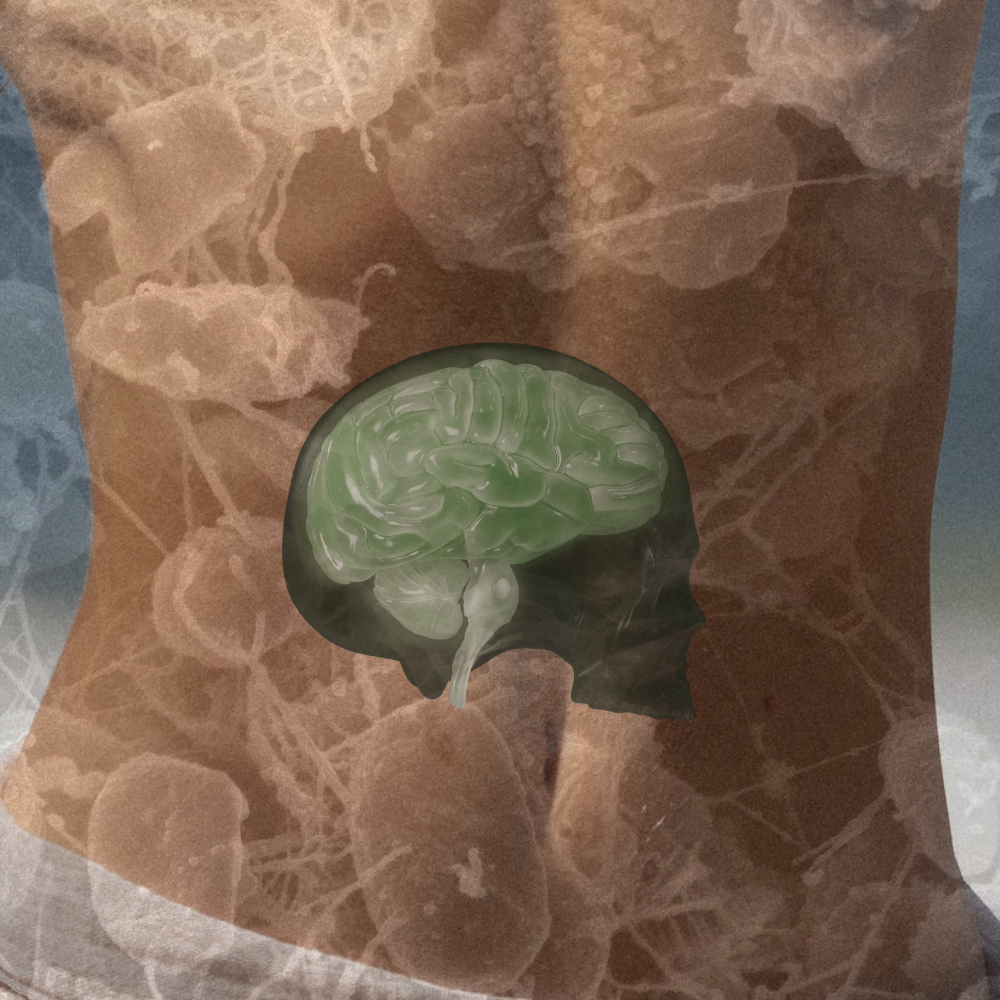
This is the brain–skin connection, and understanding it is the key to solving chronic flare-ups like acne, eczema, rosacea, psoriasis, redness, congestion, and barrier dysfunction.
Let’s break down how stress truly becomes the root cause, and why healing the brain–gut–skin axis is the only long-term path forward.
I. The Gut–Brain Connection: Why Your Gut Is Considered Your “Second Brain”
Your gut and brain are in constant, two-way communication through complex biochemical channels, with the vagus nerve serving as the main information highway.
The Vagus Nerve: Your Internal Communication Superhighway
The vagus nerve sends real-time updates about:
- microbial balance
- inflammation
- digestion
- nutrient status
- emotional stress
When the gut is imbalanced (dysbiosis), the signals traveling to the brain become distorted. This can lead to:
- heightened anxiety
- poor stress resilience
- disrupted digestion
- inflammatory cascades that show up directly on the skin
This is why many people notice that breakouts or eczema flare-ups appear exactly when stress is high or digestion feels “off.”
It’s not a coincidence, it’s biology.
II. Your Gut Makes Your “Feel-Good” Neurotransmitters (Not Your Brain)
One of the biggest misconceptions is that neurotransmitters like serotonin and dopamine are primarily produced in the brain.
In reality:
- ~95% of serotonin is made in the gut
- ~50% of dopamine is produced in the gut
- ~15% of your gut lining is made of enteroendocrine cells (EECs) that behave like mini hormone factories
These neurotransmitters influence:
- emotional stability
- mood
- cravings
- sleep
- pain perception
- stress reactivity
So when the microbiome is out of balance, neurotransmitter production drops.
This doesn’t only affect your mental state, it also affects your skin.
Why?
Because neurotransmitters regulate inflammation and immune signaling.
Low serotonin and dopamine are linked to:
- increased inflammatory responses
- heightened skin sensitivity
- slower wound healing
- flare-ups triggered by emotional stress
When your gut is imbalanced, your mood shifts… and your skin follows.
III. The HPA Axis: How Stress Hormones Directly Trigger Skin Problems
The HPA axis (hypothalamic-pituitary-adrenal axis) is your body’s main stress-response system.
When activated, it releases cortisol, your stress hormone.
Short bursts of cortisol are fine.
But chronic stress?
That’s where things go wrong.
What chronic cortisol does to the body and skin:
- Suppresses digestion → leading to bloating, constipation, reflux, IBS
- Weakens the gut barrier → causing “leaky gut” and inflammation
- Increases oil production → worsening acne and congestion
- Degrades collagen → accelerating aging
- Disrupts ceramide and lipid synthesis → weakening the skin barrier
- Elevates inflammatory cytokines (TNF-α, IL-6) → driving eczema, rosacea, psoriasis
The result?
Even mild stress can trigger instant flare-ups.
This is why so many people say:
“My skin breaks out every time I feel overwhelmed.”
It’s not psychological, it’s physiological.
IV. The Gut Barrier: Where Stress, Immunity, and Skin Inflammation Begin
Your gut barrier is your body’s primary line of defense.
When healthy, it keeps harmful substances out of your bloodstream.
When weakened, it becomes permeable, a condition commonly called leaky gut.
This allows molecules like LPS (lipopolysaccharides) to enter the bloodstream, triggering global inflammation.
Inflammation from LPS affects:
- your mood
- your immune system
- your hormonal balance
- and your skin clarity
LPS has been shown in studies to worsen acne, eczema, dermatitis, and systemic redness.
This is why flare-ups often occur after a period of stress, poor sleep, or digestive upset.
The gut barrier weakens → inflammation rises → the skin responds.
V. Why Stress Is the Root Cause of Gut Issues, and Skin Issues
Stress is not “just in the mind.”
It physically restructures the microbiome.
Stress causes:
- slowed digestion
- reduced microbial diversity
- overgrowth of harmful bacteria
- weakened gut lining
- increase in inflammatory metabolites
- impaired serotonin/dopamine production
Once the gut is imbalanced, the skin becomes hypersensitive to the inflammation produced inside the body.
Stress → Dysbiosis → Inflammation → Skin Flare-Ups
This is the true sequence.
VI. The Skin–Brain Connection (Through the Gut): Why Emotional Stress Shows Up on Your Face
Even though your skin and brain seem unrelated, they originate from the same embryonic tissue (ectoderm).
They’ve been communicating since before birth.
When you're under stress:
- the brain sends inflammatory signals
- the gut changes its motility and microbial balance
- the immune system becomes over-alert
- the skin barrier becomes weaker
- oil glands become more reactive
This is why:
- acne flares during deadlines
- eczema flares during emotional stress
- rosacea flares during anxiety
- psoriasis worsens during overwhelm
Stress is not a trigger, it’s a root cause pathway.
VII. Why Single-Ingredient Solutions Never Work
If stress and inflammation travel across multiple biological systems (brain → gut → skin), then…
no single ingredient , not probiotics alone, not skincare alone, not adaptogens alone, is enough.
You need a strategy that addresses the entire axis.
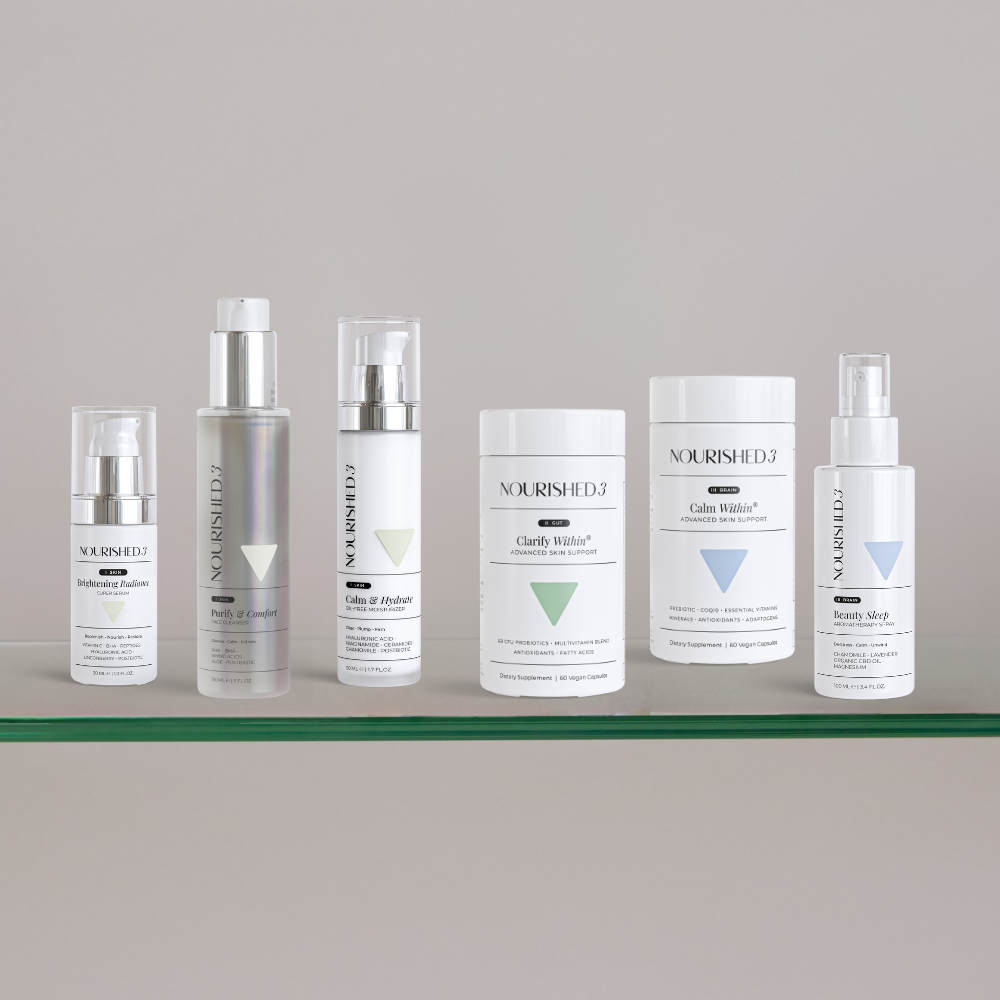
VIII. The Triple Biotic™ Strategy: A Multi-Layered Solution for the Brain–Gut–Skin Axis
This is where the Nourished3 approach becomes scientifically powerful.
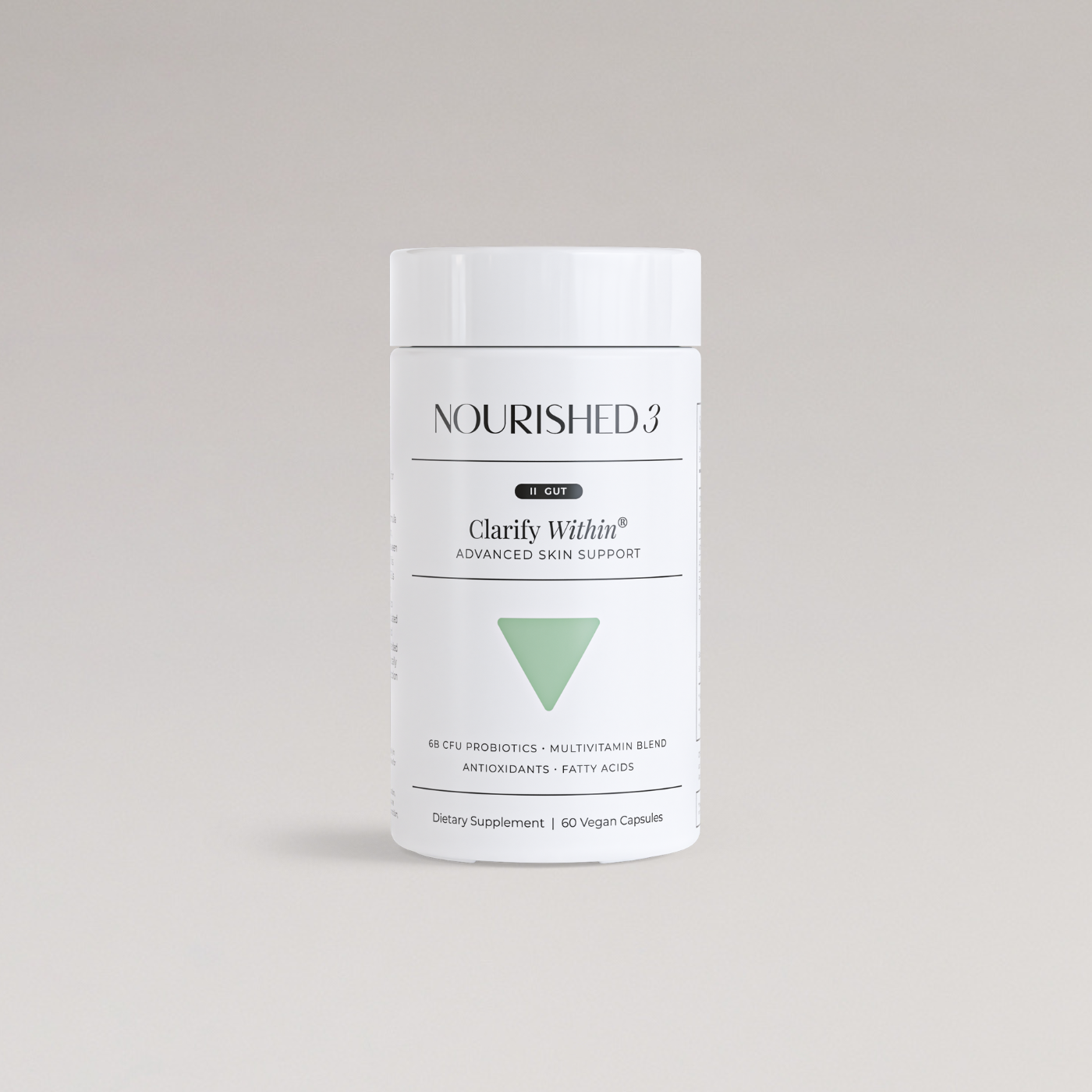
1. Probiotics (Cerebiome®, S. boulardii)
Restore microbial balance
Improve neurotransmitter production
Modulate the stress response
Support gut integrity
Reduce inflammatory biomarkers
SHOP CLARIFY WITHIN (Gut Supplement)
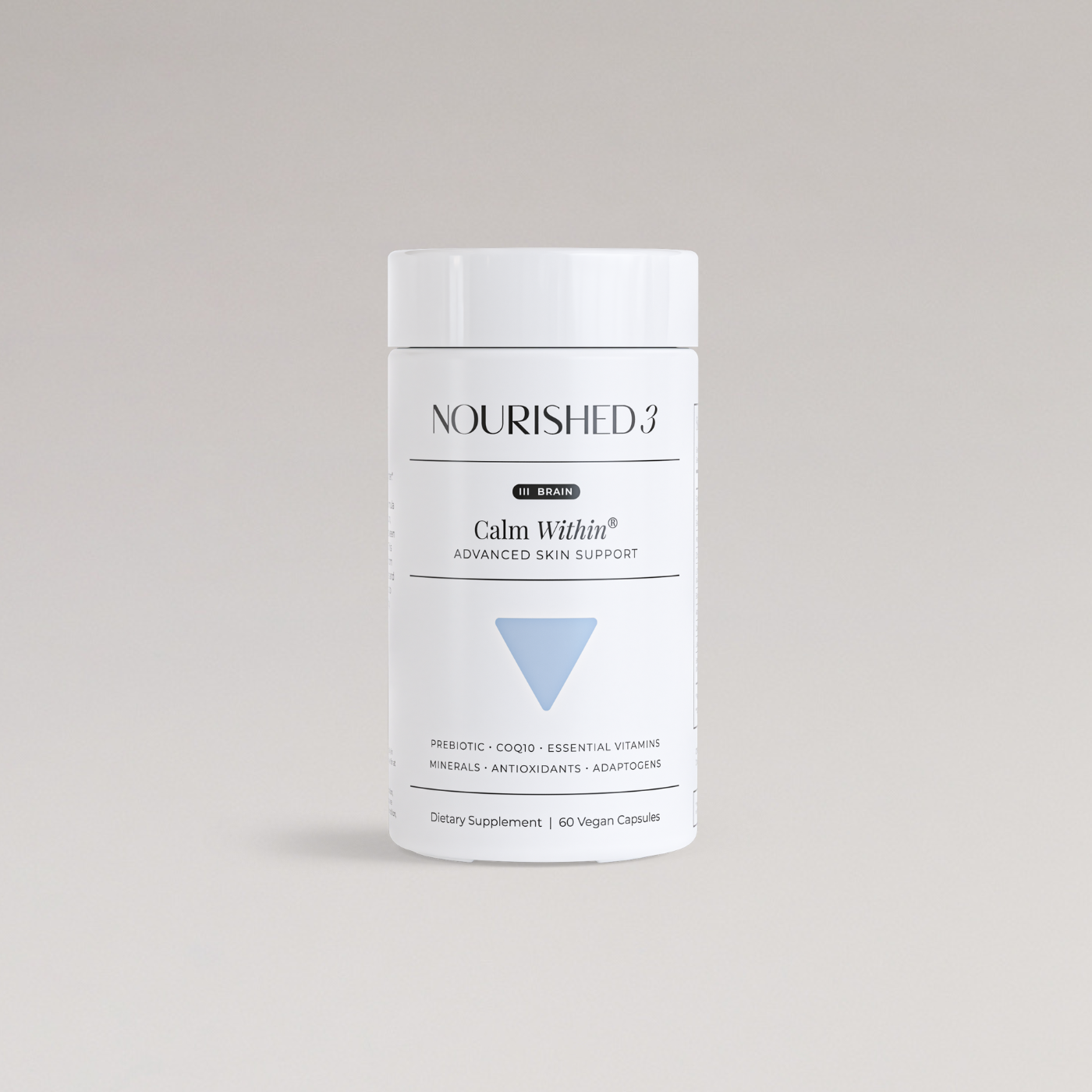
2. Prebiotics (Livaux®)
Feed beneficial bacteria
Increase SCFA production, especially butyrate
Strengthen the gut barrier
Reduce gas and bloating
Lower LPS-driven inflammation
SHOP CALM WITHIN (Brain Supplement)
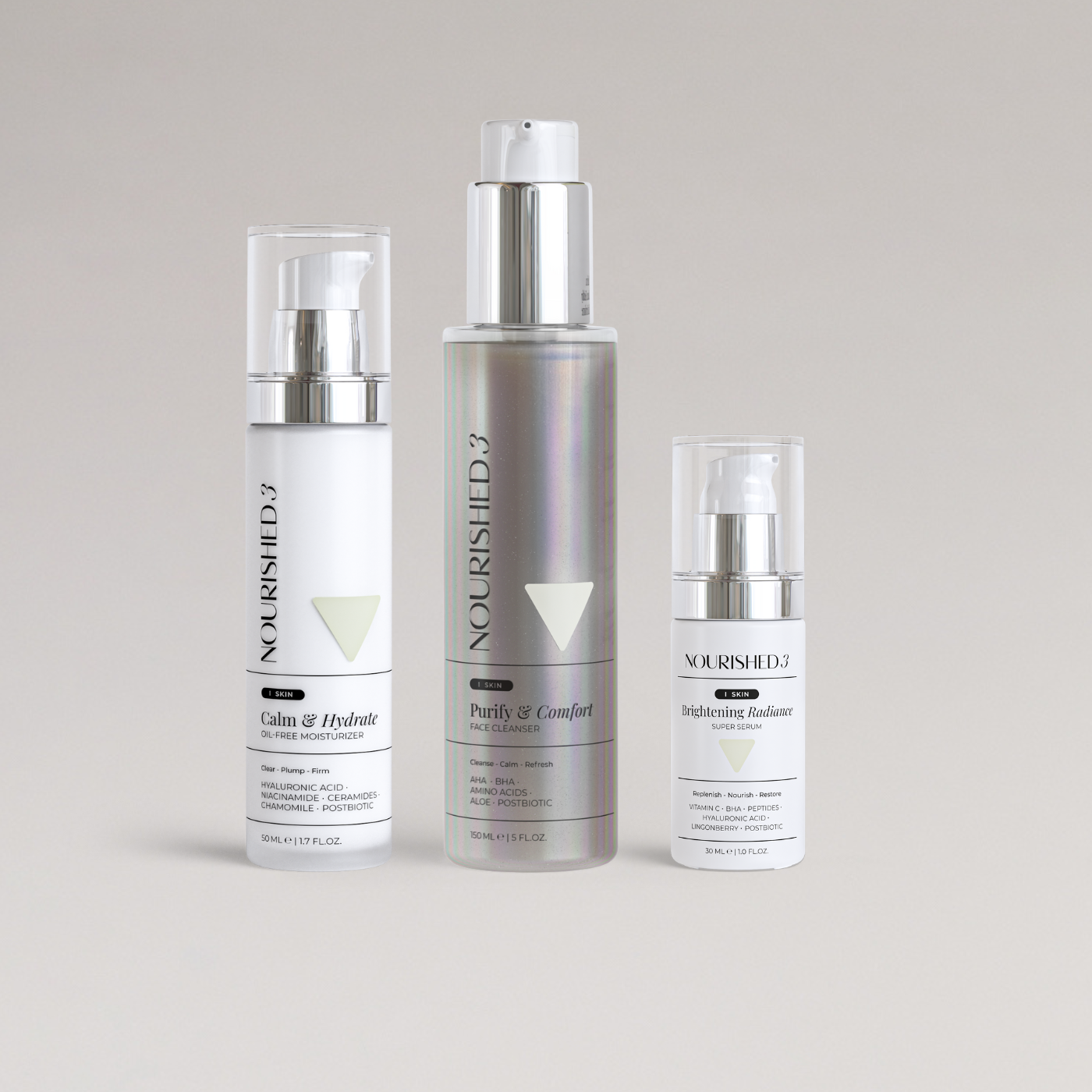
3. Postbiotics (Pomegranate Ferment Lysate)
Support the skin microbiome
Reduce inflammation on the skin surface
Improve cell renewal
Strengthen barrier function
Support healthy pH and hydration
Together, these ingredients work on the full biological pathway, delivering results that topical products alone can never achieve.
IX. The Result: A Healthier Mind, Calmer Gut, and Clearer Skin
When you support the brain–gut–skin axis holistically:
- cortisol levels normalize
- neurotransmitter production improves
- inflammation decreases
- gut barrier restores
- microbiome diversity increases
- skin barrier strengthens
- flare-ups reduce
- mood stabilizes
- digestion improves
- breakouts calm
- redness diminishes
- aging slows
This is what true inside-out healing looks like.
And this is why Nourished3 exists.